
by Glorifix
Share
Share
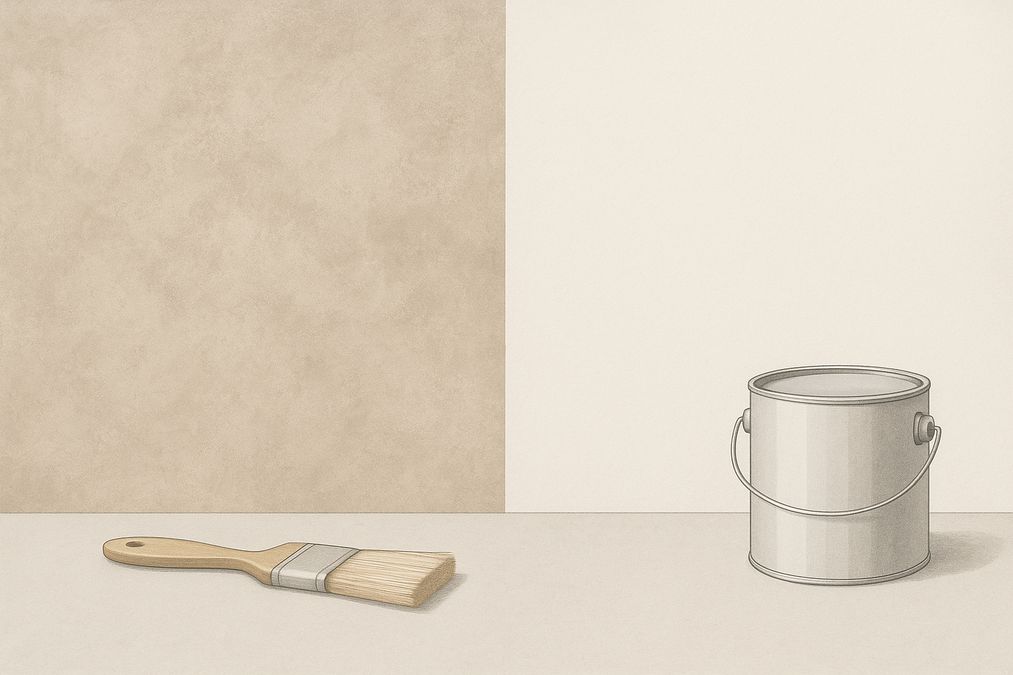
What Is Limewash Paint, and How Is It Different?
Limewash is a centuries-old, mineral-based paint made from lime (calcium hydroxide), water, and natural pigments. Unlike conventional acrylic or latex paints, limewash is absorbed by the surface—penetrating porous materials such as plaster, masonry, or brick.
Key Properties of Limewash:
- Creates unpredictable, soft tonal variations and a cloudy depth
- Connects visually to historical and contemporary design
- Offers natural antimicrobial properties (mold and bacteria resistance)
- Requires careful application technique—results depend as much on the installer as on the product
Traditional paints, on the other hand, create a uniform film (layer) on top of the surface, resulting in an even, predictable appearance. These paints can be scrubbed, and their colours and finishes (matte, eggshell, semi-gloss) are more consistent from one wall to the next.
Why Does Limewash Texture Vary from Traditional Paint?
From the perspective of seasoned finish specialists, the differences between limewash and traditional paints are not just about color but about how each product interacts with light, surface, and touch. Let’s dive into the core reasons why limewash produces such distinct and varied textures compared to conventional paints.
1. Chemical and Physical Composition
- Limewash: Made from natural minerals, its particles are larger and granier, resulting in a subtle, chalky, and deeply layered surface that breathes and ages gracefully.
- Traditional Paints: Typically contain finely ground pigments in an acrylic, vinyl, or oil-based binder for dense coverage, which forms a consistent, closed film.
In our experience, many homeowners expect limewash to cover like normal paint. One of the most common mistakes is treating limewash as a regular wall finish—rolling it on with the same expectations. The result: disappointment or even the need to redo the job. Professional advice: Expect and embrace variation. That’s where its charm lies.
2. Application Technique Matters More Than You Think
Limewash is traditionally brushed onto the wall with broad, overlapping strokes. Each pass leaves slight differences in pigment and moisture, producing the signature mottled, layered look—something rollers or sprayers can’t replicate with the same authenticity.
Traditional paints (applied by roller, brush, or sprayer) are engineered for uniformity, specifically designed to cover earlier coats seamlessly. When repainting, consistency is the goal—which is why so many customers are surprised by the textural life of limewash.
3. Surface Preparation Influences Limewash Results
Limewash paint is at its best on porous surfaces like Venetian plaster, brick, or bare drywall. The texture and absorbency of the substrate directly influence the final appearance—the more “tooth” and openness in the wall, the more depth and movement in the finished look.
- On newly plastered surfaces: The texture reads richly, with pronounced variation and cloudiness.
- On primed drywall: Some variation appears, but it is subtler, and the effect can be less dramatic.
- On previously painted (sealed) walls: Many installers and homeowners share the concern, “Is it safe to paint over old paint?” For best results, remove previous coatings or use a mineral-friendly primer. For more, see Is It Safe to Paint Over Old Paint in Toronto Homes 2026?.
4. Environmental and Lighting Effects
Toronto’s changing seasons, variable humidity, and fluctuating temperatures can subtly alter how limewash dries. Unlike conventional paint, limewash absorbs and releases moisture, so each wall takes on unique tonal qualities depending on airflow, room sunlight, and even prevailing winds during application.
We often recommend clients consider the positioning and type of ambient lighting. Natural daylight brings out the gentle movement and patina in limewashed walls, whereas artificial light can flatten or shift the perceived tone.
Comparison Table: Limewash Paint vs. Traditional Paint Finishes
| Feature | Limewash Paint | Traditional Paint |
|---|---|---|
| Texture | Chalky, layered, cloudy, unpredictable | Smooth, even, predictable |
| Appearance | Soft colour shifts, organic depth | Uniform colour and gloss |
| Durability | Moderate, develops patina over time | High, resistant to scrubbing and stains |
| Moisture Resistance | Breathable, suitable for brick/plaster | Seals surfaces (varies by type) |
| Installation Difficulty | Requires experience; technique-driven | DIY-friendly (roller, brush, spray) |
| Best Used On | Stone, brick, lime or Venetian plaster | Most primed, sealed surfaces |
| Maintenance | Spot clean; touch-ups blend subtly | Washable, easy to clean |
| Cost | Material cost moderate; labour higher (due to skill) | Materials and labour both generally lower |
Design Considerations for Toronto Homes & Businesses
Helping clients choose finishes is all about priorities. Here’s what we commonly discuss with homeowners, designers, and contractors:
1. Where Limewash Shines (and Should Be Avoided)
- Best For: Living rooms, bedrooms, feature walls, fireplaces, boutique retail, and hospitality spaces wanting a tactile, inviting feel that doesn’t feel artificial.
- Less Recommended For: High-traffic areas requiring frequent scrubbing (such as busy kitchens or hallways), or surfaces that are heavily sealed/non-porous.
2. Lighting & Space Planning Advice
For open spaces with abundant natural light, limewashed walls develop dynamic depth that shifts throughout the day—ideal for creating serene, high-end residential or boutique commercial interiors. In small, dimly lit spaces, we often suggest pairing limewash with lighter palettes or even combining with decorative paints and wallpapers for strategic accent effects.
3. Colour Selection
One frequent customer question: “Will the colour on the wall look like the swatch?” It’s important to understand that limewash always dries lighter than the wet sample and each application (even on adjacent walls) produces subtle differences. We recommend sampling on a hidden area first—especially in older Toronto homes with unique plaster surfaces.
Product Selection: What to Look for When Choosing Limewash
A high-quality limewash delivers depth, durability, and beauty. At venetianplastershop.ca, we recommend asking these questions:
- Is it made from pure slaked lime with mineral pigments?
- Is it suitable for your substrate (masonry, plaster, drywall)?
- Are you purchasing from a supplier with expertise? Our Giorgio Graesan Italy products are trusted by professionals for consistency and performance.
If you’re looking for personalized recommendations, check out our Expert Guide to Buying Limewash in Toronto for 2026.
Installation Considerations & Professional Advice
We’re often asked, “Can I DIY limewash?” For small projects and accent walls, adventurous homeowners sometimes achieve good results—but the organic movement that makes limewash special is as much about skilled, controlled imperfection as it is about product quality. If you want consistent variation (not patchiness or unevenness), professional installation is highly recommended, especially for commercial applications.
Common Pitfalls and How to Avoid Them
- Poor Surface Prep: Skipping the step of cleaning, deglossing, or priming the wall can cause inconsistent coverage and peeling. Always confirm your substrate is compatible.
- Treating Limewash Like Ordinary Paint: Using rollers or expecting a ‘painted’ look leads to disappointment.
- Not Accounted for Drying Variability: Toronto’s indoor humidity fluctuates seasonally. Avoid applying limewash in damp, cool weather for best results.
- Neglecting Sampling: Never forgo a real wall sample in your space—the final appearance can’t be predicted from a can or online photo.
Maintenance and Longevity of Limewash Paint
Limewash develops character as it ages—a highly desirable feature for certain design schemes. It is less scrubbable than acrylic wall paint, but it can be spot-cleaned with a damp soft cloth. Touch-ups are typically less noticeable than with flat paint, as the new coat blends in naturally due to the inherent variation of the material.
For commercial clients, especially hospitality and retail spaces in Toronto, consider a subtle matte sealer over limewash in high-touch zones for extra resiliency—though this will slightly reduce the breathability and depth of the finish.
Budget Considerations: Limewash vs. Other Finishes
- Limewash: Material cost is moderate, but labour can be higher due to the hand-applied process. The finish, however, offers a bespoke, artistic touch that can elevate both residential and commercial properties.
- Traditional Paint: Often more economical for large, utilitarian spaces and allows easy touch-ups.
- Venetian Plaster: Our signature offering—higher initial investment, but delivers unmatched depth, sophistication, and microclimate benefits. Learn more about Venetian Plaster finishes here.
- Decorative Paints & Wallpaper: Excellent for accent walls, layered effects, and when you want maximum colour or pattern precision. See our wallpaper collections.
Expert Recommendations: Choosing the Right Finish for Your Project
- If you crave organic variation, softness, and a natural feel—limewash is ideal for living spaces, cozy bedrooms, or intimate dining areas.
- For statement walls or refined elegance, especially where durability is key, consider Venetian plaster or decorative paints.
- Those who value pattern and bold colour are wise to mix limewash with wallpaper or use decorative paints as accents.
- In modern condos or high-traffic commercial spaces, conventional paints may deliver the efficiency and maintainability required.
- If uncertain, ask our team at venetianplastershop.ca for a tailored consultation—we’ll identify the right combination for your design vision, timeline, and budget.
Frequently Asked Questions
- Will limewash paint hide wall imperfections?
- To a degree, yes—its layered texture masks minor flaws, but doesn’t level major blemishes like drywall mud or patching compounds can. On Venetian plaster or cementitious bases, the result is especially forgiving.
- Is limewash suitable for bathrooms or kitchens?
- Limewash’s breathability makes it a great choice for powder rooms and less humid kitchens. For busy or wet zones, sealers improve cleanability, but for direct water exposure, tile or washable paint is better.
- Can you combine limewash with other finishes?
- Absolutely! One powerful design move is to use limewash on feature walls, with wallpaper, decorative paint, or Venetian plaster on adjoining surfaces for dimensional contrast.
- Is there a best time of year for limewashing in Toronto?
- Spring, summer, and early autumn are optimal for application. Avoid cold, damp conditions to ensure proper drying and adhesion.
Final Thoughts
Ultimately, why limewash paint texture varies from traditional paint finishes comes down to material composition, application technique, and substrate. If you’re seeking a living, breathing wall surface rich in character, limewash is an inspired choice for 2026 and beyond.
Ready to explore limewash, Venetian plaster, decorative paint, or wallpaper for your Toronto home or business? Contact the team at Venetianplastershop.ca for expert guidance, the highest-quality Giorgio Graesan Italy products, and trusted installation services—or to sign up for one of our hands-on workshops. We look forward to helping you create a space that’s truly your own.
STAY IN THE LOOP
Subscribe to our free newsletter.

Choosing the right wall finish for your Toronto home, business, or design project is not simply a matter of style—it’s a decision that impacts durability, maintenance, cost, and even the value of your property. One recurring question we hear from homeowners, designers, and contractors is: when can decorative paint stand in for traditional plaster walls, […]
Looking for an affordable way to create the luxurious look of plastered walls—without the cost or hassle of traditional plasterwork? Whether you’re a homeowner, an interior designer, or a contractor in Toronto, mastering affordable decorative paint techniques to mimic plaster finish can transform residential or commercial spaces dramatically. Our expert team at venetianplastershop.ca shares must-know […]
Decorative wall finishes can transform an ordinary space into one that feels custom-designed and inviting. However, many Toronto homeowners, designers, and contractors often face two big concerns: achieving the high-end look of plaster finishes—such as Venetian plaster, limewash, or textured surfaces—on a reasonable budget, and understanding which affordable decorative paint techniques offer the best blend […]
Introduction: Understanding Your Decorative Finish Options in 2026 If you’re planning to give your Toronto home, retail store, or office a fresh new look in 2026, you’ve likely considered decorative finishes. But one of the biggest decisions you’ll face is whether to use a DIY paint kit or invest in professional decorative finishes like Venetian […]