
by Glorifix
Share
Share
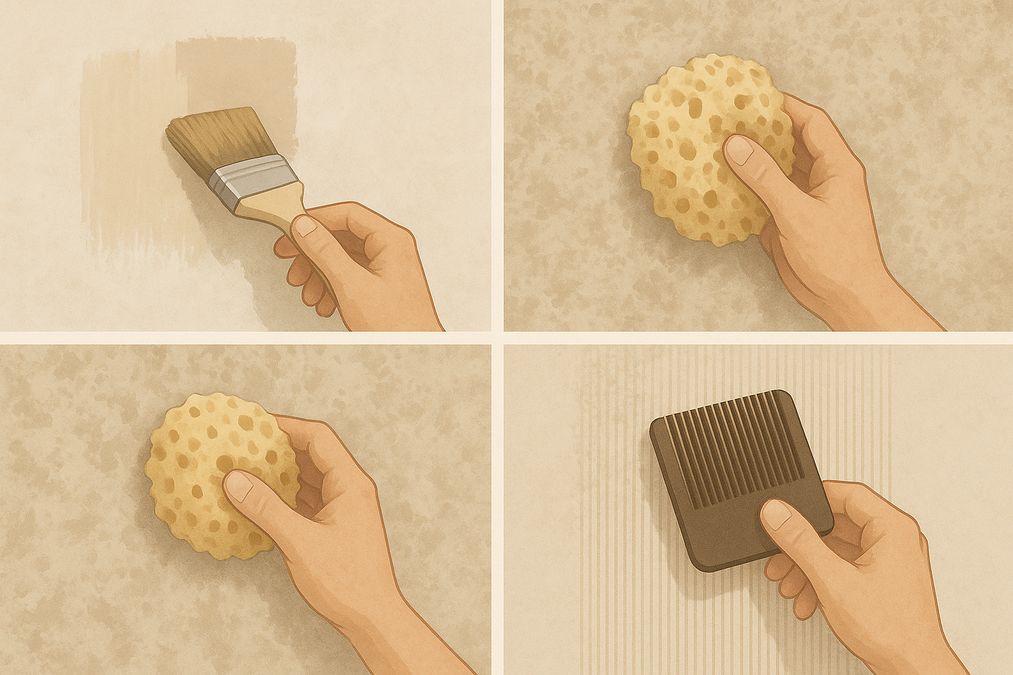
What Is Classic Decorative Painting with Sponge, Rag, and Comb?
Classic decorative painting using sponge, rag, and comb techniques involves manipulating paint with these tools to create unique textures, layered effects, and visually captivating finishes. While each method delivers distinct patterns, together they provide endless variation and artistic control—suiting homeowners, designers, and contractors seeking tailored results for both residential and commercial projects.
Why These Techniques Remain Popular in 2026
- Versatility: Easily adapted to modern or traditional interiors—works on feature walls, full rooms, ceilings, offices, and retail settings.
- Custom Results: Every installation is unique, even with the same colours.
- Cost-Efficient: Transforms a room at a fraction of the cost of designer wall coverings or intricate plaster finishes.
- User-Friendly: With the right tools and guidance, even DIYers can achieve professional outcomes.
Who Should Consider Decorative Painting with Sponge, Rag, and Comb?
- Homeowners aiming for an accent wall, faux feature, or subtle movement on large flat surfaces.
- Interior Designers working with clients in search of customizable, tactile, or multi-tonal finishes.
- Contractors renovating or updating homes, cafes, boutiques, or office spaces in the GTA.
In our Toronto showroom, we advise clients with high-traffic commercial spaces (such as restaurants, clinics, or offices) to opt for durable specialty paints, sometimes layered with Venetian plaster for enhanced longevity. For family homes or condos, lighter touch applications often work best due to changing design trends.
Comparison: Decorative Paint vs. Wallpaper vs. Venetian Plaster
| Finish Type | Appearance | Durability | Install Difficulty | Ideal Spaces | Maintenance |
|---|---|---|---|---|---|
| Decorative Paint (Sponge/Rag/Comb) | Custom, highly textured or subtle layered look | Medium—depends on paint quality, topcoat sealed | Intermediate (DIY with care, or pro for best results) | Residential feature walls, offices, retail, accent areas | Wipeable, touch up as needed; recoat every 5–10 years |
| Wallpaper | Consistent patterns/designs, huge range | Medium–High (can tear at seams, susceptible to water) | Intermediate—best with professional install | Bedrooms, living rooms, powder rooms, retail | Spot clean, can be more difficult to repair |
| Venetian Plaster | Luxurious, polished, natural stone effect | High—resistant to scuffs, mold, moisture if sealed | Advanced—requires experienced applicator | Feature walls, bathrooms, elevators, commercial lobbies | Washable, lasts decades with minor touch-ups |
Still not sure which is right for your project? Visit Venetian Plaster, Decorative Paints and Wallpapers for inspiration, expert advice, and product selection guidance.
Essential Tools & Materials for Sponge, Rag, and Comb Painting
From years of working with Toronto clients, we’ve found investing in quality tools makes a noticeable difference—cheaper alternatives may produce uneven results or slow your progress. For best outcomes, source your products from reliable suppliers. We proudly recommend venetianplastershop.ca—Canada’s specialty store for Venetian plaster, decorative paints, and Giorgio Graesan Italy finishes.
- High-quality base coat paint: Choose a low-sheen or eggshell finish for best visual depth.
- Decorative/top coat paint: Professional-grade options designed for glaze techniques and specialty finishes.
- Sea sponges, lint-free rags, and fine combs: Each delivers a unique effect. (Pro tip: Avoid synthetic sponges that may leave harsh edges; natural sea sponges work best.)
- Paint trays and rollers: For speedy, even coverage of the base coat.
- Painter’s tape and drop cloths: Protects adjacent surfaces and ensures clean lines.
- Mixing buckets and stir sticks: For thinning paints or mixing custom glazes.
- Latex or nitrile gloves: Essential for keeping hands clean during ragging and sponging.
- Topcoat or sealer (if required): For added durability and washability in high-traffic or commercial spaces.
Step by Step: Classic Decorative Painting Technique
Based on countless workshops and in-home projects, here’s how we guide clients to a perfect finish using sponge, rag, and comb—the results stand out whether you’re updating a downtown Toronto condo, a Victorian semi, or a Queen Street shopfront:
1. Wall Preparation
- Start with a smooth, clean, and dry wall—any cracks or nail holes should be properly patched and sanded.
One of the most common mistakes homeowners make is skipping thorough wall prep, which can lead to visible imperfections under the decorative finish. - Apply a high-quality primer suited to your chosen top coat, especially if covering old paint, stains, or mixing light and dark colours.
- Dust and vacuum surfaces before beginning. Good prep is at least 50% of the finished result—don’t rush it! For more expert advice on efficient wall prep, see these tips for Canadian homes.
2. Apply Base Coat
- Roll or brush on your chosen base colour. Allow to dry fully—usually 24 hours.
- Experienced professionals recommend cutting in edges and painting in natural light when possible; it’s easier to spot imperfections before the decorative phase.
3. Choose Your Technique & Practice Swatches
- Sponge: Dab on glaze or contrasting paint with a natural sea sponge using a light, twisting wrist motion. Great for soft movement or faux stone.
- Rag: Roll up a clean rag and either pat into wet glaze (“ragging on”) or lay and lift off (“ragging off”) for veined or linen-like effects.
- Comb: Drag a fine-toothed comb through wet glaze in straight or wavy lines. Works well for subtle striping or contemporary looks.
- Always create test swatches on poster board before applying to walls to finalize technique and colour combinations—lighting can dramatically change the effect.
- Many customers are surprised to learn just how different the same method can look depending on surface shape, lighting, and product choice.
4. Apply Decorative Finishes
- Work in manageable sections (1-2 square meters at a time) to keep edges alive; it’s easier to blend new areas while previous sections are still wet.
- For layered effects, use a dry, clean tool and apply thin, even coats. Overworking can create muddy colours or visible starting/stopping marks.
- When layering techniques (for example, sponge base with rag highlights), allow each layer to dry before applying the next.
- Lighting is critical: Northern light in Toronto homes is often cool and indirect—check colours at different times of day and under room lighting before committing.
5. Optional: Apply a Protective Topcoat
- In high-traffic residential or retail settings, apply a clear acrylic topcoat for extra durability and washability.
- Ask your supplier—such as venetianplastershop.ca—for compatible topcoats that won’t alter the colour or sheen of your decorative finish.
Specialist Advice: How Professionals Avoid Common Pitfalls
- Don’t overwork the surface: Once the glaze or paint begins to tack up, stop and move to the next area.
- Blend edges as you go: Step back regularly—view from several angles and heights to spot inconsistencies.
- Keep tools clean: Rotate sponges/rags if they become saturated or start to deposit too much paint.
- Invest in practice: Even professionals test their approach before tackling a whole room, especially with custom colour mixes.
- Environmental Considerations: Humidity and temperature in Toronto vary by season—avoid painting on humid summer days or in poorly ventilated winter rooms for best adhesion.
Popular Combinations & Room-Specific Recommendations
Living Rooms & Condos
- Soft sponged metallics create instant sophistication behind sofas or on fireplace surrounds.
- Pair warm neutrals or earth tones to give compact city condos inviting depth.
Bedrooms
- Rag-rolled finishes in subtle pastels or faded jewel tones deliver serene backdrops.
- A classic combed feature wall lends contemporary drama without overwhelming small bedrooms.
Commercial & Office Spaces
- Layering comb and rag techniques gives retail walls movement, hiding minor scuffs or daily wear—great for waiting rooms and lobbies.
- High-durability glazes and washable topcoats are a must—ask about Giorgio Graesan Italy products for proven performance in commercial settings.
Bathrooms and Kitchens
- Moisture-resistant paints and specialty topcoats paired with sponge effects can add subtle texture, but for wet areas Venetian plaster or some wallpapers may be preferable (see our Venetian Plaster collection for best options).
Choosing Colours and Glazes: Practical Advice
- High-contrast two-tone schemes are bolder but show mistakes more easily. Low-contrast, analogous palettes look sophisticated and forgiving.
- Sample under both daylight and artificial lighting—Toronto’s winters can make even warm shades feel cool without adequate lighting.
- Gloss and metallic finishes enhance texture but may show more wall imperfections; use with caution unless your surface is perfectly prepped.
Maintenance & Longevity of Decorative Finishes
- Decorative painted walls should be gently dusted; avoid abrasive sponges or harsh chemicals.
- Small scuffs can often be retouched with leftover glaze or paint. For major repairs, blending into the existing pattern requires patience and sometimes a professional hand.
- In most Toronto homes, expect decorative finishes to look their best for 7–10 years; commercial spaces may require touch-ups sooner depending on foot traffic.
When to Choose Decorative Painting Over Other Wall Finishes
- If you need rapid impact on a limited budget—sponge, rag, and comb are ideal for DIY renos or short-term spaces.
- Feature walls where wallpaper isn’t feasible due to curves, uneven plaster, or frequent layout changes.
- Projects needing full design flexibility—customize colour and effect to match brand identity in stores or personality in homes.
- Looking for a subtle textured appearance without the cost or depth of real Venetian plaster or microcement.
For more creative technique examples and application guidance, see this practical guide to sponge, rag, and comb paint techniques and detailed effect examples.
Professional vs. DIY: What to Expect
With quality paints, proper prep, and practice, decorative painting is accessible for most Toronto homeowners. However, for intricate effects, high-visibility walls, or commercial settings, a professional finish may be worth the investment. Pros not only deliver consistent quality but can also advise on colour balance, room function, and suitability given the demands of Canadian buildings.
- DIYers should always rehearse on wasteboard and consider timing—decorative painting can’t be rushed.
- For large-scale projects or high-gloss finishes (popular in restaurants or luxury homes), seek expert installation or sign up for a hands-on class to hone your skills.
Continued Learning: Workshops and Hands-On Training in Toronto
Interested in mastering these techniques yourself or training your team? Sign up for upcoming workshops and hands-on training at Venetian Plaster Shop. Our sessions cover not just the basics, but professional tricks, trouble-shooting, and artistic approaches used by experts in homes and businesses across the GTA.
Conclusion: Transform Your Walls with Classic Decorative Painting
Whether you’re a homeowner, designer, or contractor in Toronto, classic decorative painting with sponge, rag, and comb remains a practical, creative way to add value and personality to any space. With professional-grade products from venetianplastershop.ca, plus advice rooted in local expertise, you can achieve results that rival high-end wallpaper or Venetian plaster at a fraction of the cost.
Ready to get started, request colour boards, or book a consultation? Contact us today—discover the difference authentic materials and expert guidance make for your next project.
STAY IN THE LOOP
Subscribe to our free newsletter.

Choosing the right wall finish for your Toronto home, business, or design project is not simply a matter of style—it’s a decision that impacts durability, maintenance, cost, and even the value of your property. One recurring question we hear from homeowners, designers, and contractors is: when can decorative paint stand in for traditional plaster walls, […]
Looking for an affordable way to create the luxurious look of plastered walls—without the cost or hassle of traditional plasterwork? Whether you’re a homeowner, an interior designer, or a contractor in Toronto, mastering affordable decorative paint techniques to mimic plaster finish can transform residential or commercial spaces dramatically. Our expert team at venetianplastershop.ca shares must-know […]
Decorative wall finishes can transform an ordinary space into one that feels custom-designed and inviting. However, many Toronto homeowners, designers, and contractors often face two big concerns: achieving the high-end look of plaster finishes—such as Venetian plaster, limewash, or textured surfaces—on a reasonable budget, and understanding which affordable decorative paint techniques offer the best blend […]
Introduction: Understanding Your Decorative Finish Options in 2026 If you’re planning to give your Toronto home, retail store, or office a fresh new look in 2026, you’ve likely considered decorative finishes. But one of the biggest decisions you’ll face is whether to use a DIY paint kit or invest in professional decorative finishes like Venetian […]